
What Is Book Spine Glue in Bookbinding?
Introduction
The term “book spine glue” is really one of the vital parts of the printing and binding sector as it decides the lifetime of a printed and bound book and its quality. In every type of book, paperback, hardcover, textbook, art book, product catalog or corporate brochure the spine glue determines the strength of the pages, that of the spine and the versatility the book will possess in being transported, stored and handled frequently.
This article examines the working principles of book spine glue, its primary categories, its use in bookbinding applications and the problems that are commonly encountered, and also examines the factors that should be taken into account when deciding upon the adhesive solution to use for a production job. This guide will be useful if you want to use hot melt adhesive materials for commercial printing, publishing and industrial binding.
What is Book spine glue?
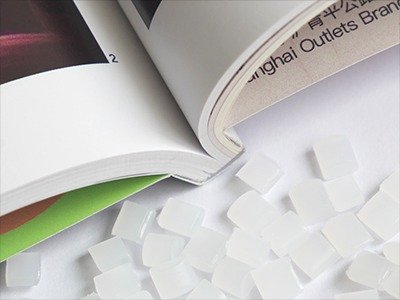
Spine glue is a special type of hot melt glue that is used in the perfect binding processes. It is a glue applied on the spine of book block after milling process, which is used to adhere the inner pages of the book block to each other and to attach the cover to the book block and is used as a basic material of the structural strength of the paperback book.
The book block is first milled so as to expose the fibers in the paper in the perfect binding process, the book spine glue is then applied evenly on to the book block and then the cover is pressed on to the book block. When the adhesive layer cools or cures, it interpenetrates the paper fibers to create secure mechanical and chemical bonds, holding each page firmly in place on the spine.
The binding operation might seem simple, but the spine gluing compound should have a number of performance specifications, such as:
- Good initial tack to ensure rapid positioning during high-speed production
- An appropriate open time to match the operating cycles of various binding machines
- Stable viscosity to ensure even application without stringing or clogging
- Excellent heat and aging resistance to prevent adhesive failure during transport and storage
- Good flexibility, allowing the book to be opened and read repeatedly without the spine cracking
Book spine glue in the market are mainly classified as EVA spine glue and PUR spine glue, according to their different applications.
EVA spine glue has the features of quick curing, high productivity and relative low price and is widely used to perfect bind regular paper, such as textbooks, novels, magazines and office documents.
However, PUR spine glue has higher bonding strength and temperature resistance. It has a unique advantage in bonding the materials which are difficult to bond such as coated paper, laminated paper, art paper etc., and is used for high-end art books, hardcover books, photography albums and high-end publications.
Why Is Book spine glue So Important?

Advanced binding equipment does not necessarily mean book quality, many companies think so. However, this is not the case. The most important medium used for binding books is the book spine glue, which not only affects the production efficiency of books, but also directly affects the durability and customer satisfaction of the book.
Ensuring Page Adhesion
The most important role of the book binding spine glue is to properly attach each page to the spine.
When the adhesive is able to go between the fibers of the paper, it forms a strong bond and would not become loose even with repeated handling. On the other hand, if a different glue is used or if the glue doesn’t penetrate enough, pages may become loose or fall off the page and an entire production batch might have to be reworked.
Thus, choosing the appropriate grade of glue according to the type of paper will be the first step in ensuring a good quality binding.
Enhancing Spine Flexibility
During the lifetime of a book, it can be opened and read hundreds or thousands of times, so the spine must have more than just strength, it must be flexible as well.
Elastic spine glue will not become brittle or fail to bond when bent and unbent repeatedly. This is especially important for books used regularly like textbooks, reference books and product manuals.
The PUR spine glue of better quality will generally provide higher flexibility, and the EVA spine glue will be suitable for most common commercial printing applications.
Boosting Production Efficiency
Production efficiency is also just as important for modern printing companies.
Spine glues that are stable perform consistently with the same viscosity and flow rate, which means they can be applied to ensure uniformity. This helps to prevent things like bond breaks, strings and nozzle plugging, which decreases equipment downtime.
Moreover, it is necessary to have an adequate open time so that the high-speed perfect binding machine can work continuously to boost the production speed and save adhesive resources.
Accommodating Diverse Paper Materials
Today, the printing industry doesn’t only use ordinary uncoated paper; it has a range of coated and art papers, matte coated and recycled papers, as well as specialty papers.
The requirements that paper types put on book spine glue vary extremely. PUR, for example, bonds to coated paper much better than conventional EVA hot melt adhesives, which tend to have weak adhesion to coated paper.
Thus, the performance of binding materials can only be optimally achieved by using the right spine glue for the right paper type.
Extending the book’s lifespan
Books go through many stages from production to final delivery, such as transportation, warehousing, retail, and the long-term use of the book.
Good spine glue will perform well in different conditions of temperature and humidity, will not soften in high temperatures, crack in the cold and degrade with time and will not cause pages to come loose.
This is particularly crucial for export-oriented printing companies. Not only does a dependable spine glue eliminate post-sale grievances, but it also helps build the brand and boost customer satisfaction.
What types of Book spine glue are available?
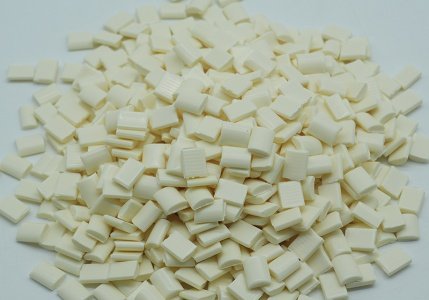
The present EVA hot-melt adhesive and PUR hot melt adhesive are the two major types of book spine glue. They both have their applications for spine binding, but their properties vary in their use in actual production because of formulation, curing and compatibility.
By grasping these two categories of spine glue, businesses can choose the most appropriate binding solution for their books, considering various factors, including the book’s type, paper material, production efficiency, and cost.
EVA Book spine glue
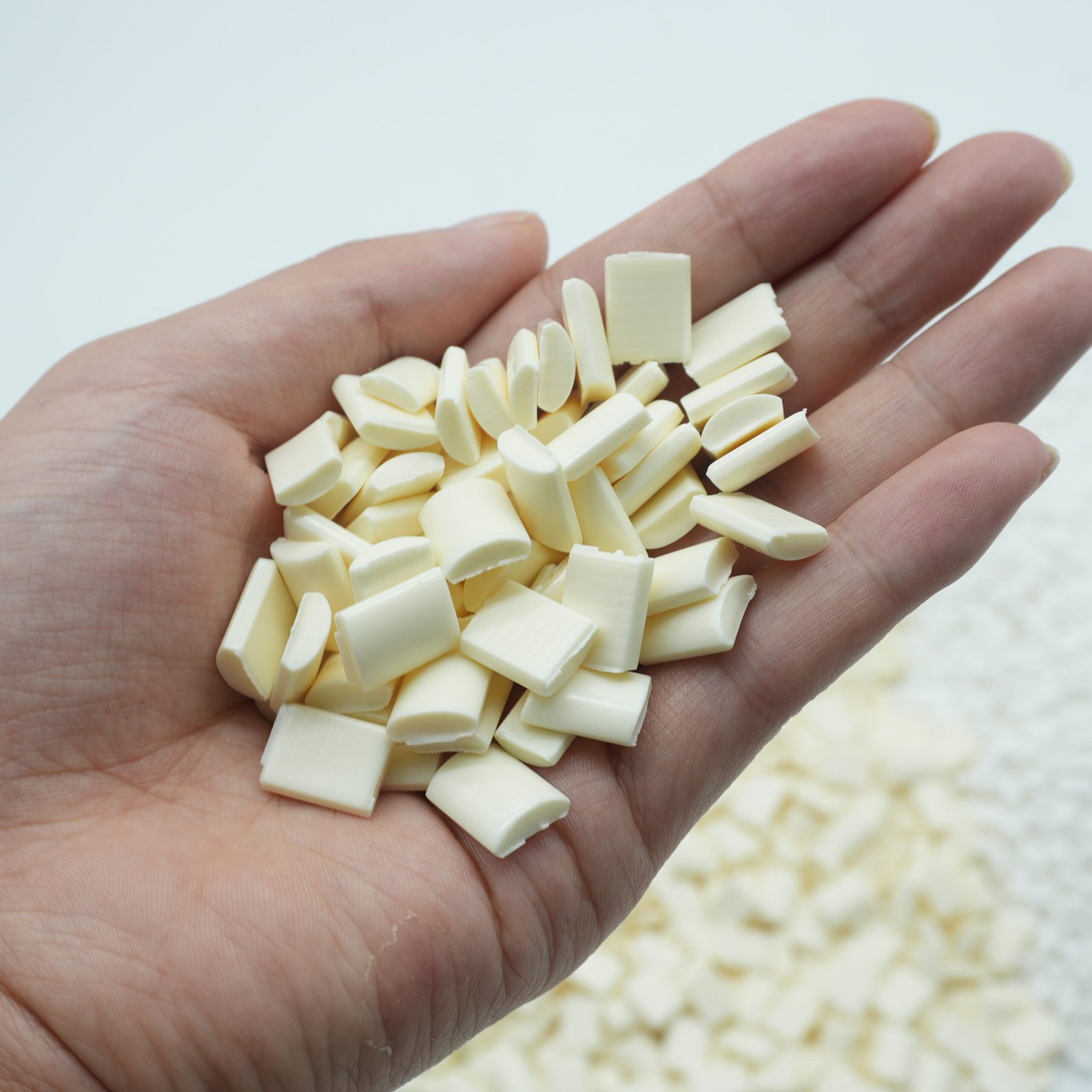
EVA hot melt adhesive is currently the most widely used type of book spine glue. Works through a hot melt process and is very flowable on heating, but quickly develops a stable bond when it is cooled, which is perfect for high-speed perfect binding production lines.
Lightweight paper, uncoated wood-free paper, or standard offset paper are the most common types of paper for most printing companies, and EVA spine glue is suitable for daily production while ensuring efficiency and cost control.
It is noted that EVA has limited adhesion to low absorbency material, therefore it is often required to use PUR for high-end publications.
Advantages of EVA Spine Glue
The following features are a priority for businesses that opt for EVA spine glue:
- Fast curing speed, suitable for high-speed production lines;
- High initial tack, allowing the binding to set quickly;
- Simple operation with relatively low equipment requirements;
- High cost-effectiveness, suitable for large-volume commercial printing;
- Low long-term maintenance costs.
Therefore, EVA remains the mainstream choice for spine binding in the fields of general books, textbooks, magazines, and office printing.
Adhesive (Shanghai) Co. Ltd EVA Spine Glue Solutions
Adhesive (Shanghai) Co. Ltd has a variety of EVA spine glue products, suitable for the needs of various production lines and paper materials.
For example:
1015 EVA Spine Glue
Good initial tack and stable flow for normal paperback and commercial binding. It softens at about 80°C and it shows a viscosity of around 30,000 cps at 140°C. Enables high-speed production and ensures stable adhesion of the adhesive, which makes it suitable for various types of publications, such as textbooks, novels, product manuals etc.
1019 EVA Spine Glue
The 1019 grade has been developed for applications that require greater heat resistance and long-term stability for spine gluing applications as compared with standard products. It greatly improves spine stability and minimises breakage of books due to changes in the environment for books that have to be transported, stored or exported.
In addition to spine glue, perfect binding typically requires side glue to reinforce the cover attachment.
PUR Book spine glue
With the growth of the high-end publishing market, an increasing number of companies are adopting PUR spine glue.
The key characteristic of PUR hot melt adhesive is that it cures not only through cooling but also via a chemical reaction with atmospheric moisture, forming a high-strength cross-linked structure. This leads to hot melt adhesive bonding performance well beyond that of conventional EVA hotmelt adhesives.
These properties make PUR the ideal solution for use as a spine glued to high quality publications.
It is particularly suitable for:
- Coated paper
- Art paper
- Laminated paper
- UV-printed materials
- Heavyweight paper
PUR offers excellent flexibility and superior adhesion for the difficult-to-bond materials.
Advantages of PUR Spine Glue
Compared to EVA, PUR spine glue offers the following features:
- Higher bonding strength;
- Superior resistance to high and low temperatures;
- Greater aging resistance;
- Excellent flexibility;
- Better adhesion to coated and laminated paper.
Therefore, PUR is the preferable solution for publishers and print shops looking for quality binding solutions.
Adhesive (Shanghai) Co. Ltd PUR Solutions
Adhesive (Shanghai) Co. Ltd has developed PUR 6620 Book spine glue to satisfy the needs for high-end binding.
The product is designed for optimal environmental protection and excellent heat resistance and flexibility, so it is suitable for a variety of high-quality publications, such as premium art books, hardcover books and photography albums. PUR 6620 provides stable application performance at 140°C and has good bonding to materials that are difficult for conventional EVA adhesives to bond such as coated paper and laminated paper.
How to Choose the Right Book spine glue?

While the question of “EVA versus PUR” is a common one for many consumers of book spine glue, it is not always the question that matters most to them—it is which kind is better suited to their production needs.
In practice, none of the glues can be used in all types of bindings. There are many factors involved in choosing a book spine glue, including the type of paper to be bound, speed of production, types of bookbinding equipment used, and the environment where the book will be used.
Selection Based on Paper Type
The type of paper used will have a significant impact on the performance of book spine glues.
The adhesion absorption properties of the paper are high, and most EVA products can be used, such as standard uncoated paper (offset paper) and lightweight paper.
However, when using coated paper, art paper, or laminated materials, PUR products are recommended to ensure a more stable and reliable bond.
Selection Based on Production Speed
Bookbinding glue for high-speed automated production lines must have uniform open time and viscosity.
However, too short an open time might allow the adhesive to start setting before the binding process is finished, while too long an open time could mean loss of efficiency.
So the parameters of the adhesive should be adjusted in accordance with the speed of the equipment.
Selection Based on Long-Term Durability
If the papers will be stored for a long time, the aging resistance and flexibility of the adhesive should be given more attention.High-quality adhesives maintain a stable bond over many years of use, significantly reducing the risk of pages falling out or the spine cracking over time.
Common Issues and Solutions for book spine glue
A knowledge of typical issues and their causes enables businesses to enhance the quality of their binding, optimize production processes, and maximize the performance benefits of Book spine glue.
One of the most frequent problems in perfect binding and a quality worry for numerous printing firms is pages falling out.
Causes typically include:
- The type of paper and the glue used in the bookbinding might not match
- Glue that has not sufficiently penetrated the fibres of paper
- The milling depth of the mill plate is not sufficient
- The thickness of the glue layer is not uniform
- Inadequate bonding strength of an adhesive
Solutions:
- Use the right Book spine glue for the paper selected
- Use PUR products in coated paper or laminated paper
- Periodically check the quality of the milled spines and glue application uniformity
- Stable Application temperature and viscosity
Spine Cracking
When the book is opened for the first time, some books crack, followed by visible cracks in the spine; this is generally due to insufficient flexibility of the book binding spine glue.
Common causes include:
- Glue layer is too hard
- Glue has aged
- Insufficient low-temperature resistance
- Loss of elasticity after long-term storage
Solutions:
Choose a book spine glue with good flexibility . Choose the appropriate EVA or PUR formulation for the book . For high end publications and books for longterm archiving, PUR generally has better flex resistance.
Stringing or Uneven Glue Application
Production problems such as stringing, breaking of the glue or unevenness of the glue layer thickness influence not only the appearance but also the quality of binding.
Causes typically include:
- Unstable viscosity of the Book spine glue
- Inaccurate temperature control in the glue tank
- Degradation of glue performance due to prolonged high-temperature heating
- Clogged equipment nozzles
Solutions:
Follow the recommended application temperature, and avoid prolonged exposure of the glue to excessive temperatures. Use a book spine glue with stable thermal properties to minimize irregularities in application due to viscosity fluctuations.
Binding Failure After High-Temperature Transport
Books for export-oriented printing companies may be subject to sea freight, warehousing and exposure to diverse climatic conditions. If the softening point of the book spine glue is too low, the high-temperature environment can make the adhesive layer soften again, which may lead to the pages shifting or even the pages falling off.
Solution:
Choose a bookbinding spine adhesive with improved heat resistance as per the target market of the product. If you are publishing for hot climates, select products that have better heat resistance, to maintain their stability during transport.
Conclusion
In summary, book spine glue is an indispensable adhesive for perfect binding process; its flexibility, open time, softening point and adhesion strength directly determines the quality of the finished book. Choosing the right product for a production line involves distinguishing between EVA and PUR base materials, as well as knowing the applications for spine glue and side glue.
Adhesive (Shanghai) Co. Ltd has more than 20 years’ experience in R&D and production of environment-friendly hot-melt adhesives. Our complete line of Book spine glues is ISO, CE and CARB certified and achieves a bonding consistency rate of over 99% and serves the diverse needs of e-commerce book sellers, printing plants, equipment distributors and export markets. If you need product specifications, samples or customized formulations, please feel free to contact us for a complete binding adhesive solution.
Leave a Reply