
Is Hot Melt Glue Waterproof?
If you’re sourcing industrial adhesives for packaging, furniture assembly, gift box bonding, or export manufacturing, one common technical question often affects adhesive selection: is hot melt glue waterproof? Many buyers and factory engineers misunderstand hot melt water resistance, assuming that all hot melt glue can provide stable waterproof performance simply because it is solvent-free and becomes solid after cooling. This misunderstanding can result in bonding issues during ocean transportation, high-humidity storage, and long-term product use.
The quick answer is: standard EVA hot melt glue is water resistant, it is not water proof. EVA hot melt glue, modified by industrial grade, can have better resistance to humidity and moisture, and can be used in various manufacturing and export processes. With continuous water immersion or severe moisture conditions, however, it is important to use the right adhesive depending on the application needs.
Here we describe what is meant by waterproof glue, how waterproof it is compared to moisture resistant, and what factors affect hot melt glue performance in the waterproofing application. A knowledge of these drawbacks will enable the manufacturers to recognize the areas in which EVA hot melt glue is effective and where other adhesive solutions might be needed.
Why Hot Melt Glue Is Often Considered Waterproof?
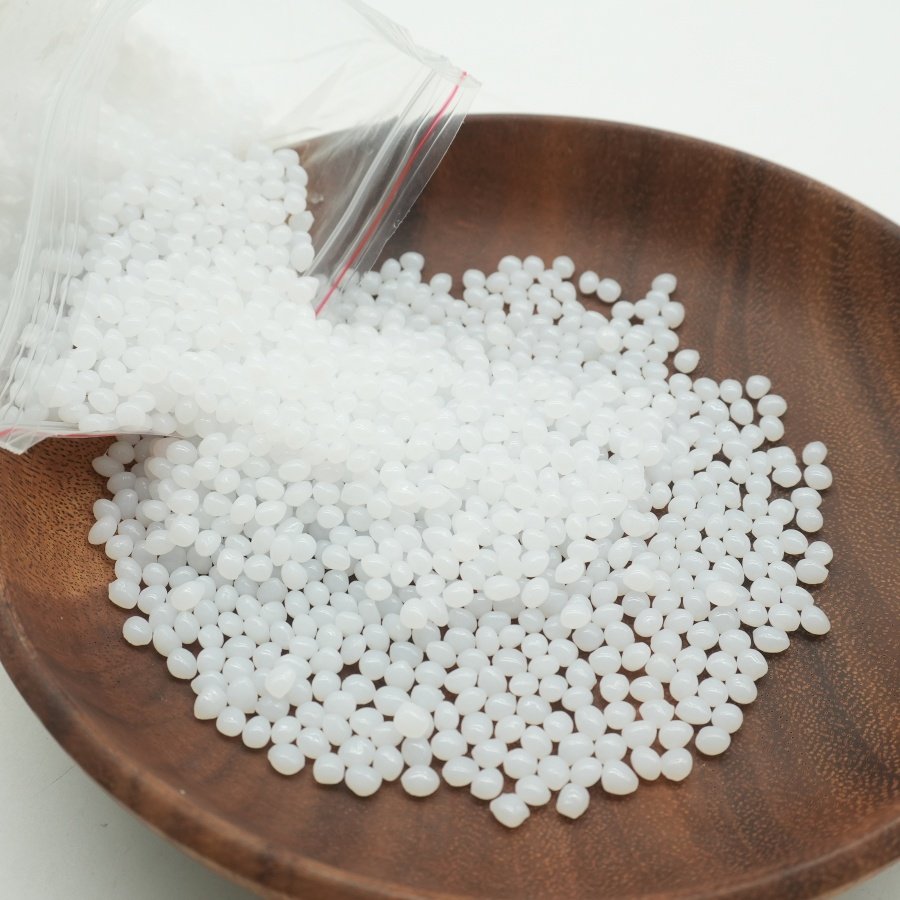
The dilemma surrounding is hot melt glue waterproof is frequently confused with water-based glue. Because water is a component of the glue, the traditional PVA water-based glue can soften, swell or lose adhesion when wet. Hot melt glue, on the other hand, is a 100% solid adhesive system, with no water or solvents. On cooling, it creates a compact layer that is not water soluble and acts as an adhesive.
The good resistance to occasional splashes, humidity and short term moisture exposures is provided by this solid structure of the hot melt glue. But not all manufacturers see this property as waterproof performance. Hot melt glue can perform better than numerous water-based glues in damp environments, however it can’t be as water resistant or waterproof as water-based glue.
In the real manufacturing environment, the performance of the adhesive will be influenced by adhesive formulation, substrate compatibility, processing condition and exposure time. That’s why testing to determine if a hot melt glue will be waterproof is more than just testing to see if it cools off to a solid state.
Test Data: Water Resistance Performance of Standard Hot Melt Glue
To better understand whether hot melt glue is waterproof, adhesive performance needs to be evaluated under controlled environmental conditions rather than judged only by the solid appearance of the cooled glue layer.
In this evaluation, a damp heat aging condition of 40°C and 85% relative humidity (RH) was used to simulate challenging environments such as long-distance ocean transportation and high-humidity storage. The test samples were prepared using standard industrial bonding substrates with a controlled adhesive coating thickness of 0.2 mm, representing common manufacturing conditions.
The test results of standard EVA hot melt glue showed the following performance changes:
- Initial average T-peel bonding strength: 45.2 N/25 mm
- After 250 hours of damp heat aging: bonding strength retained approximately 59% (26.7 N/25 mm)
- After 500 hours of damp heat aging: bonding strength retained approximately 37% (16.7 N/25 mm), with visible changes at the bonding interface
- After 48-hour water immersion at room temperature: bonding strength decreased significantly, with edge peeling observed in some bonded areas
- Water absorption rate of cured adhesive film: 0.35%
These results indicate that standard EVA hot melt glue can provide reliable bonding performance under normal indoor and moderate humidity conditions, but its performance may decrease under prolonged water exposure or continuous high-humidity environments.
Therefore, when manufacturers ask “is hot melt glue waterproof?”, the answer depends on the application requirements. EVA hot melt glue offers good resistance against occasional moisture and humidity, but applications involving continuous water contact require careful adhesive selection and performance evaluation.
Core Difference: Waterproof vs Moisture Resistance in EVA Hot Melt Glue
The confusion around is hot melt glue waterproof mainly comes from treating moisture resistance and waterproof performance as the same requirement. In industrial adhesive selection, these two performance levels are evaluated under different exposure conditions.
| Performance Level | Moisture Resistance | Waterproof Performance |
| Water Exposure | Occasional splash, humidity, condensation | Continuous water contact, soaking, or outdoor water exposure |
| Typical Test Conditions | 40°C / 85% RH humidity aging for accelerated environmental evaluation | 24–72 hours or longer water immersion tests depending on application requirements |
| Key Performance Data | Bond strength retention after humidity aging, interface stability, aging resistance | Bond strength retention after immersion, water penetration resistance, long-term durability |
| Environmental Simulation | Sea freight, tropical warehouse storage, high-humidity production areas | Outdoor products, continuous wet environments, submerged applications |
The key difference is the duration and intensity of water exposure. A bond that maintains performance after high humidity aging at 40°C / 85% RH may still require additional validation before being used in applications involving direct water contact.
Therefore, when manufacturers ask “is hot melt glue waterproof?”, the answer depends on whether the requirement is moisture resistance or true waterproof durability.
What Factors Affect Hot Melt Glue Waterproof Performance?
1. EVA Hot Melt Glue Formulation
The moisture resistance and environmental adaptability of hot melt glue are directly determined by the formula.The formula has a direct impact on the moisture resistance and environmental adaptability of hot melt glue. The properties such as adhesion strength, flexibility and durability over time are affected by the content of EVA resin, the type of tackifying resin, and the type of additives used.
Normally the performance of industrial adhesives is assessed through a variety of parameters including softening point, open time, viscosity and resistance to aging. The right type of EVA hot melt adhesive will bond normally under normal humidity conditions; modified grades are available for better environmental resistance.
2. Substrate Material Compatibility
The waterproof performance is greatly affected by the bonded materials. Moisture can not only permeate the adhesive layer, but can also permeate through the interface between the adhesive and the substrate.
For instance, MDF and plywood are moisture sensitive and need good adhesive compatibility, while PVC edge banding and plastic surfaces need it. These bonding systems are usually tested in the industrial sector by measuring peel strength, tensile strength and aging performance after exposure to humidity.
3. Application Conditions
Other important processing parameters which influence the performance of EVA hot melt glue are also important. Common application parameters are:
Application temperature
- Adhesive coating amount
- Pressing pressure
- Open time
- Surface cleanliness
In adhesive testing practices, even slight changes in processing conditions can have a significant impact on the final bond strength. Therefore, the ability of an adhesive to perform is typically tested after it has been applied, not as the adhesive itself.
4. Environmental Exposure Conditions
The waterproof performance required is dependent on the actual work environment. Accelerated aging tests are usually performed in the laboratory under conditions of high humidity, such as 40°C and 85%RH (relative humidity) to simulate high humidity storage and transport.
The tests provide a useful indication of the performance of EVA hot melt glue in the environment. In general:
- Occasional moisture exposure: hot melt glue can provide reliable bonding performance.
- High humidity environments: Modified EVA grades may be required.
- Continuous water contact or immersion: A different adhesive technology may be more suitable.
Thus, when choosing EVA hot melt glue, the conditions of use, testing needs and service environment should be considered, not just by the word “waterproof.”
Hot Melt Glue Selection Guide Based on Humidity and Shipping Conditions
After understanding the factors affecting hot melt glue waterproof performance, manufacturers can select the right adhesive solution based on actual working conditions. Is hot melt glue waterproof ? The answer is yes, but it depends on your application and how much water it is exposed to.
| Application Condition | Recommended Solution |
| Dry indoor production and normal transportation (40–60% RH) | Standard hot melt glue is suitable for furniture, packaging, woodworking, and general bonding applications. |
| Export sea freight and high-humidity storage (70–90% RH, 20–60 days transportation) | Select EVA hot melt glue grades with suitable aging resistance and validate performance under humidity aging conditions such as 40°C / 85% RH. |
| Continuous water contact, outdoor exposure, or long-term immersion | Standard hot melt glue is generally not recommended. PUR reactive hot melt adhesive or other specialized waterproof adhesive solutions may be considered. |
Selecting hot melt glue should be based on actual humidity conditions, transportation environment, substrate materials, and expected service life. A suitable adhesive choice helps manufacturers balance bonding performance, durability, and production requirements.
Common Operational Mistakes That Reduce Hot Melt Glue Water Resistance
Even with the correct EVA hot melt glue selection, improper production operations can reduce bonding durability. The question “is hot melt glue waterproof?” depends not only on adhesive formulation but also on application control.
1. Incorrect adhesive application amount
If the adhesive does not provide proper coverage, there may be weak spots that allow moisture to seep in. In high humidity environment like 70-90%RH storage or long distance sea freight, stable adhesive application is key.
2. Insufficient Cooling and Setting Time
EVA Hot Melt Glue must have adequate setting time after application to ensure the glue bond is stable. Proper pressing and assembly control is required to achieve a good bond between adhesive and substrate, for example, an EVA hot melt adhesive that will set in about 8-12 seconds.
3. Poor surface preparation
Contamination on the surface by dust, oil and any other contaminant can reduce adhesion between EVA hot melt glue and substrates including MDF, Plywood, PVC edge banding and ABS.
The use of proper processing control can maximize the water resistance of the hot melt glue and guarantee its performance will be more reliable in the humidity environment, transportation and storage environment.
FAQ
1. Is hot melt glue waterproof?
Standard EVA hot melt glue is not a fully waterproof adhesive. It provides reliable bonding and moisture resistance for many indoor applications, but continuous water exposure or long-term immersion requires different adhesive technology.
2. How water resistant is EVA hot melt glue?
The water resistance of EVA hot melt glue depends on adhesive grade, substrate, and application conditions.Hot melt adhesive can provide stable bonding performance in normal indoor environment (RH about 40-60%). Higher humidity environments (70–90% RH) require careful adhesive selection and production control.
3. Can hot melt glue be used for furniture and edge banding?
Yes. EVA hot melt glue for furniture and edge banding is widely used because it provides fast bonding and efficient production. Typical application temperatures are often controlled around 150–200°C, depending on the specific EVA hot melt adhesive grade and equipment requirements.
4. Will EVA hot melt glue fail during sea freight?
Export transportation commonly involves 20–60 days of shipping, where container humidity and condensation can affect bonding performance. Manufacturers should evaluate adhesive suitability under conditions such as 40°C / 85% RH humidity aging tests.
5. What factors affect EVA hot melt glue waterproof performance?
Key factors include adhesive formulation, glue application amount, bonding temperature, pressing conditions, surface preparation, and substrate type. For example, bonding materials such as MDF, plywood, PVC, and ABS may require different adhesive selection.
6. Is EVA hot melt adhesive suitable for high humidity environments?
EVA hot melt adhesive can be suitable for many high-humidity manufacturing applications when the correct grade and processing conditions are selected. Buyers should consider humidity level, exposure duration, and storage environment before purchasing.
7. What is the difference between EVA hot melt glue and PUR hot melt glue?
EVA hot melt glue bonds through cooling and solidification, while PUR hot melt adhesive reacts with moisture to form cross-linked structures. PUR is usually considered for applications requiring higher water resistance or long-term moisture durability.
8. Can hot melt glue replace waterproof adhesive?
It depends on the application. Standard EVA hot melt glue is suitable for many indoor production needs, while applications involving continuous water contact, outdoor exposure, or immersion may require specialized waterproof adhesive solutions.
9. What parameters should buyers check before selecting hot melt glue?
Buyers should review technical data including application temperature, open time, setting time, viscosity, softening point, bonding strength, and environmental requirements before mass production.
10. How can manufacturers choose the right hot melt glue supplier?
A reliable supplier should provide consistent EVA hot melt adhesive quality, technical support, application recommendations, and testing guidance for different production environments.
Final Verdict

So, is hot melt glue waterproof? EVA hot melt glue works well for many industrial applications, but is not intended for permanent exposure to water.
Great Adhesive offers EVA hot melt glue solutions with professional technical support for manufacturers to choose the most suitable adhesive for their applications. Call us for adhesive suggestions and bonding solutions.
Leave a Reply