
EVA vs PUR edge banding adhesive: Which Is Better?
For furniture factories, wholesalers, importers, and distributors, choosing between EVA and PUR edge banding adhesive directly determines production efficiency, finished product quality, rework rate, after-sales complaints, and overall profit margins. Many furniture manufacturers only focus on the unit price of glue but ignore the hidden costs caused by inappropriate adhesive selection, including edge peeling, poor sealing, and seasonal bonding failure.
There is no one-size-fits-all best edge banding adhesive. Mass-produced low-cost furniture, high-end custom cabinets, bathroom kitchen furniture, and export-grade furniture require completely different adhesive solutions. EVA vs PUR edge banding adhesive adhesives have unique advantages in cost, weather resistance, bonding strength, and application scenarios. This detailed comparison guide helps industrial buyers quickly select the most suitable glue for their production lines, board types, and product positioning.
1. Quick Decision Guide: Which Adhesive Fits Your Product Line?
This quick decision table helps you match the right adhesive in 1 minute according to your product positioning, production volume, and application environment, avoiding wrong selection and unnecessary losses.
| Business & Production Scenario | Recommended Adhesive | Core Benefits |
|---|---|---|
| Mass-produced entry-level furniture, office desks, bookshelves, KD cabinets | EVA Edge Banding Adhesive | Low procurement cost, fast production, easy machine operation, suitable for high-volume continuous production |
| Kitchen & bathroom cabinets, moisture-prone furniture | PUR Edge Banding Adhesive | Excellent waterproof and moisture-proof performance, no edge peeling in humid environments |
| High-end custom wardrobes, hotel interior furniture, export furniture | PUR Edge Banding Adhesive | Seamless edge banding, high bonding stability, low after-sales risk, support high-end pricing |
| Dual production lines (mainstream + premium furniture) | EVA + PUR Combined Use | Control overall cost while improving high-end product profit margin and market competitiveness |
If you cannot confirm the adhesive matching your board type, edge banding material, and edge banding machine model, contact our team to get a free customized formula recommendation and sample test plan.
2. What Is EVA Edge Banding Adhesive? Pros, Cons & Applications
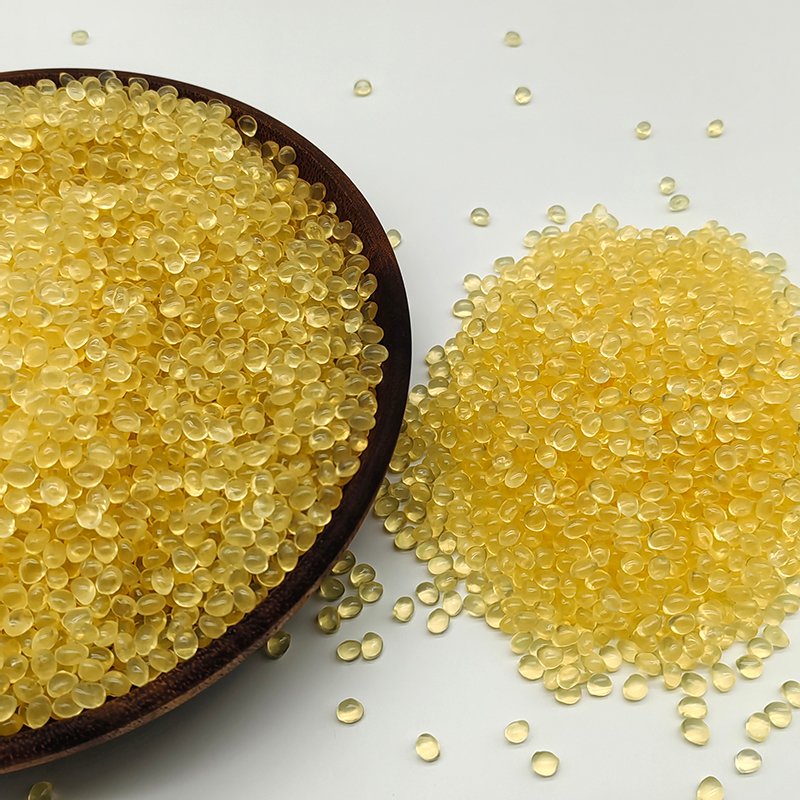
EVA (Ethylene-Vinyl Acetate) hot melt adhesive is the most traditional and widely used edge banding glue in the furniture industry. It relies on thermal melting and physical bonding, with mature technology and extremely high cost performance, and is the mainstream choice for mass-market furniture production.
2.1 Core Advantages of EVA Edge Banding Adhesive
- Low comprehensive production cost: Lower unit price, no special equipment transformation required, suitable for ordinary fully automatic and semi-automatic edge banding machines
- Simple operation & high efficiency: Low melting point, good fluidity, fast heating and molding, convenient machine start-up, shutdown and color switching cleaning, no delay in continuous mass production
- Stable supply & low threshold: Mature production process, sufficient monthly output, support large-scale factory orders and distributor wholesale stocking
2.2 Limitations of EVA Edge Banding Adhesive
- Poor heat and moisture resistance: Easy to soften and peel off in high-temperature and humid environments
- Ordinary edge banding effect: Slight glue line is easy to appear, unable to meet high-end seamless customization requirements
- Seasonal stability difference: Bonding strength decreases significantly in low-temperature winter environments
2.3 Typical Application Scenarios
MDF shelves, office furniture, flat-pack KD cabinets, entry-level wardrobes, ordinary PVC panel furniture, and all low-profit, high-volume standardized furniture products.
3. What Is PUR Edge Banding Adhesive? Pros, Cons & Premium Applications
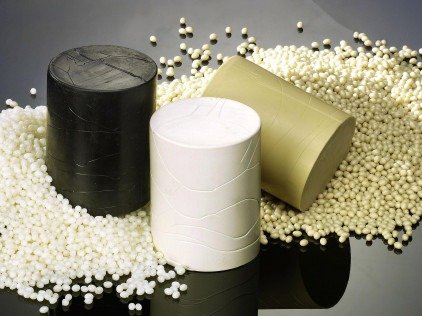
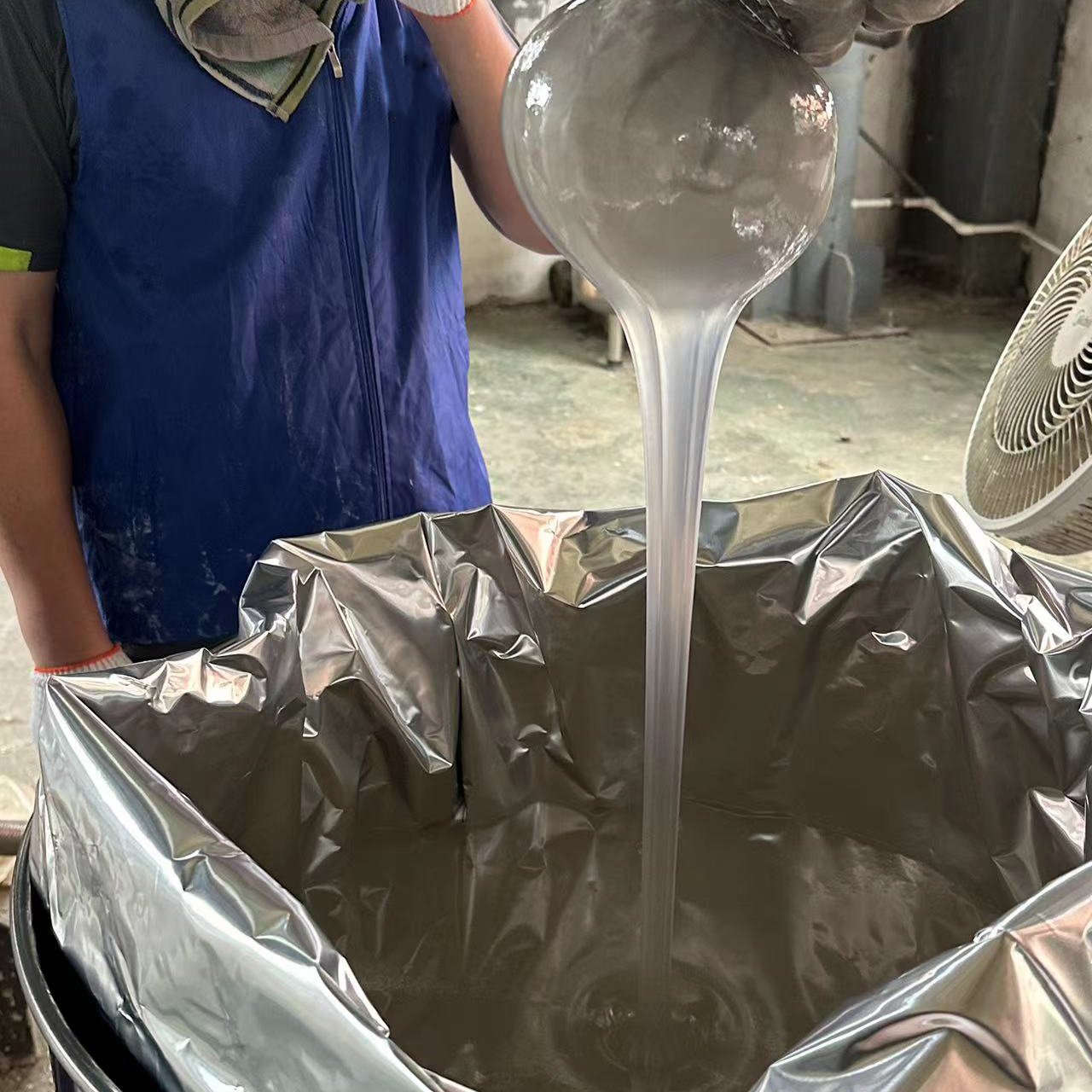
PUR (Polyurethane Reactive) hot melt adhesive is a high-end reactive edge banding material. Different from EVA physical bonding, PUR glue reacts with air and board surface moisture after construction, forming irreversible chemical bonding. It has far better durability and environmental adaptability than EVA glue, and is the mainstream upgrade direction for high-quality furniture manufacturing.
3.1 Core Advantages of PUR Edge Banding Adhesive
- Superior weather resistance: Excellent high-temperature resistance, waterproof and moisture-proof performance, no edge peeling or degumming in humid kitchen and bathroom environments and long-distance high-temperature transportation
- Seamless high-grade effect: Ultra-thin glue layer, invisible glue line, smooth edge banding, greatly improving furniture appearance and product added value
- Permanent strong bonding: Irreversible chemical reaction, no re-melting after molding, long service life, extremely low after-sales rework rate
- Strong environmental adaptability: Stable bonding performance in low temperature and high humidity environments, suitable for global export trade
3.2 Limitations of PUR Edge Banding Adhesive
- Higher unit procurement cost than EVA
- Higher requirements for edge banding machines and construction processes
- Strict storage conditions, need dry and sealed storage to prevent early moisture reaction failure
3.3 Typical Application Scenarios
Kitchen and bathroom cabinets, high-end custom wardrobes, hotel engineering furniture, commercial space supporting furniture, cross-border export furniture, and all high-value-added furniture products with strict quality requirements.
4. EVA vs PUR Edge Banding Adhesive: Full Performance & Cost Comparison
Most factory buyers only compare the unit price of glue, but the real profit gap comes from comprehensive cost including rework, after-sales complaints, and waste loss. The following comprehensive comparison helps you calculate real production benefits.
| Comparison Dimension | EVA Edge Banding Adhesive | PUR Edge Banding Adhesive |
|---|---|---|
| Bonding Principle | Physical thermal bonding (reversible) | Chemical moisture reaction bonding (irreversible) |
| Water & Moisture Resistance | Average, easy to fail in humid environment | Excellent, suitable for wet areas |
| Heat Resistance | Poor, easy to soften at high temperature | Strong, stable at high temperature |
| Edge Banding Aesthetics | Visible slight glue line | Seamless & invisible glue line |
| Unit Procurement Cost | Low | Medium-High |
| Rework & After-sales Cost | High | Extremely Low |
| Best For | High-volume, low-margin mass furniture | High-end, export, high-margin furniture |
5. Best Adhesive by Board Material and End Use
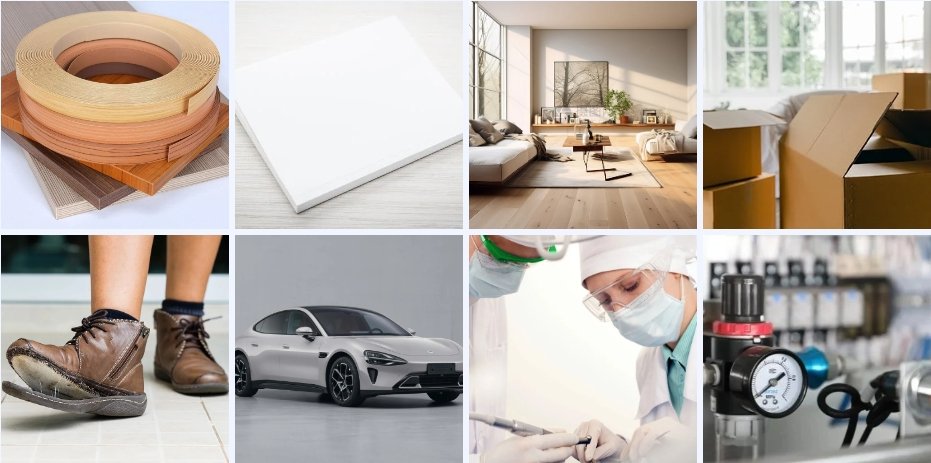
Different substrate boards have different surface densities and adhesiveness. Matching adhesive according to board types is the key to avoid bonding failure.
5.1 PVC Panels
Conventional PVC panel civilian furniture chooses EVA adhesive for stable cost control; high-end PVC furniture for export and high-temperature transportation must choose PUR adhesive to avoid degumming and edge warping.
5.2 MDF Boards
Indoor dry environment MDF mass production uses cost-effective EVA adhesive; kitchen, bathroom and wet climate MDF furniture is recommended to use PUR adhesive for long-term stability.
5.3 Veneer Furniture
Veneer furniture pursues high appearance, PUR adhesive is the first choice, with smooth edge sealing, no damage to veneer, and high-grade seamless effect.
5.4 Particle Board
Low-cost and large-batch particle board furniture adopts EVA adhesive to ensure production efficiency and control overall cost.
6. How to Reduce Production Problems and Customer Complaints
Most bonding failures are not caused by adhesive quality, but by improper machine parameters, operation and storage. Summarized factory common faults and targeted solutions to help you reduce waste and complaints.
6.1 Common Production Faults
- Edge peeling after transportation and installation
- Glue stringing and uneven glue spreading during production
- Weak corner bonding and easy cracking
- Poor bonding stability in low temperature winter
- Glue tank and roller contamination affecting bonding effect
6.2 Practical Factory Solutions
- Set accurate heating temperature according to EVA/PUR adhesive parameters to avoid overheating or insufficient melting
- Match adhesive viscosity with edge banding machine line speed to ensure uniform glue output
- Regularly clean glue tanks and pressure rollers to avoid residual old glue affecting bonding quality
- Store hot melt adhesive in dry and constant temperature environment, especially PUR glue to avoid damp failure
- Carry out small-batch board surface test before mass production to confirm bonding effect
7. How to Choose a Reliable Supplier
If you choose the wrong supplier for EVA vs PUR edge banding adhesive, you could end up with poor bonding quality, delayed shipments, production delays, and unexpected replacement costs. For buyers who plan to buy from the same supplier for a long time, the supplier’s reliability is just as important as the performance of the adhesive.
Before making large purchases, professional buying teams usually look at more than just the price.
What Buyers Check Before Ordering
- Can the supplier make sure that the quality stays the same between batches?
- Are the lead times for delivery clear and dependable?
- Can you quickly handle urgent repeat orders?
- Is there technical support available when there are problems with production?
- Is it possible to change the packaging, labels, or formulas?
- Are the export papers made out correctly and on time?
A dependable supplier lowers the risk of buying, keeps production on schedule, and helps the business grow in the future.
Why Long-Term Partnerships Matter
Changing suppliers too often costs a lot of factories money. Frequent switching can lead to new testing costs, quality that isn’t consistent, and slower production changes.
Working with a manufacturer who has been in business for a long time can help make things more consistent and save management time.
Adhesive (Shanghai) Co. Ltd has been making EVA and PUR hot melt adhesives for more than 20 years. They help distributors, importers, wholesalers, and factories by providing a steady supply and quick service.
If you’re looking at different suppliers right now, get in touch with us for samples, quotes, lead time information, or custom EVA vs PUR edge banding adhesive solutions.
FAQ
Q1: Can I mix EVA and PUR edge banding adhesive in the same glue tank?
A: No. EVA and PUR have different chemical properties and curing mechanisms. Mixing causes contamination, stringing, unstable bonding, and frequent cleaning downtime. Use separate tanks, hoses and rollers if you run both glues on the same line.
Q2: What is the MOQ and lead time for custom EVA/PUR edge banding adhesive?
A: The MOQ for custom adhesive products is 100 kg, and custom lead time is only 7–15 working days. We can adjust viscosity, open time, heat resistance and bonding formula to match your machines, boards and edge band tape, and also support OEM private label packaging.
Q3: Does PUR edge banding adhesive require special edge banding machine upgrades?
A: Many existing machines can run PUR after adjusting temperature, line speed and pressure, but older equipment without sealed glue systems may cause premature curing and frequent blockages. We can review your machine model and recommend low-cost upgrades or parameter settings.
Q4: How much extra consumption cost should a factory budget when switching from EVA to PUR?
A: Do not compare only price per kg. PUR usually applies at a thinner coat weight. We can calculate your actual cost per panel based on your board, edge banding tape and line speed, including reduced rework and warranty savings.
Q5: Are your EVA and PUR edge banding adhesives compliant with EU REACH, California CARB and other export requirements? Can you provide test reports per shipment?
A: Our edge banding adhesives meet ISO, CARB and common export standards. We provide standard certificates; custom test reports or batch-specific documentation can be arranged in advance for container orders.
Q6: How long can PUR adhesive sit in an open glue tank before it needs full cleaning?
A: PUR reacts with moisture in air. Working pot life varies by temperature and humidity. Avoid leaving PUR exposed overnight; follow scheduled tank purging to prevent cured residue, blocked nozzles and inconsistent glue spread.
Q7: Can your team provide on-site or remote technical support when edge banding failure occurs during mass production?
A: Yes. For factory clients and key distributors, we offer remote troubleshooting first; for large ongoing orders, we can coordinate technical support to review temperature settings, surface preparation and board compatibility.
Q8: Why does the same adhesive perform differently in summer versus winter even with the same machine settings?
A: Ambient humidity, board temperature, edge tape temperature and workshop airflow all affect open time and initial tack. Winter usually requires higher heating or adjusted line speed, especially for EVA. We provide seasonal setting guides for regular customers.
Q9: What is the recommended testing process before a factory switches to a new batch or a new adhesive formula?
A: Run a small test panel with your actual board, edge banding tape and production speed. Simulate transport temperature and humidity if exporting. Check peel strength, edge cracking and glue line before full-line adoption to avoid large-scale rework.
Q10: Can distributors place mixed-container orders with both EVA and PUR edge banding adhesive?
A: Yes. Mixed container shipments are available for regular distributors and importers, subject to minimum pallet quantities. Reach out to our sales team to confirm mixed-load pricing and stable delivery schedules.
Final Conclusion
When choosing between EVA vs PUR edge banding glue, selecting the right one can improve product quality, reduce complaints, and increase long-term profitability.
EVA is better for making things quickly and cheaply, while PUR is better for making high-end furniture and working in tough conditions. To reach as many customers as possible, many successful factories use both systems.
Now is the best time to improve your adhesive strategy if you are looking at suppliers, having bonding problems, or starting new product lines.
Call Adhesive (Shanghai) Co. Ltd today to get free samples, factory prices, and expert advice on how to use their products with your machines, boards, and production goals.
- Call: +86-15618525178
- Email: info@great-adhesive.com
Leave a Reply