

Why Is Hot Melt Adhesive Not Bonding Properly? Effective Causes and Solutions
If hot melt adhesive not bonding properly is affecting your edge banding or furniture production, the cause may involve adhesive temperature, viscosity, softening point, open time, substrate compatibility, or machine settings. This guide explains the most common bonding issues in hot melt adhesive applications and how to troubleshoot them for stronger, more reliable bonding performance.

If your hot melt adhesive not bonding properly, the result can be weak edge adhesion, visible glue line defects, edge lifting, delamination, production downtime, and costly customer complaints. In furniture manufacturing and edge banding operations, adhesive performance directly affects product durability, appearance, and production efficiency. When hot melt adhesive not bonding properly, the root cause is often not the adhesive itself, but rather a mismatch between adhesive properties, processing parameters, substrate conditions, and equipment settings.
To solve bonding problems effectively, manufacturers need to understand how factors such as viscosity, softening point, application temperature, open time, and adhesive chemistry influence bonding performance. This guide explains the most common reasons why hot melt adhesive not bonding properly and how to optimize edge banding results in industrial production. If you are experiencing persistent bonding issues, selecting the right adhesive formulation is often the most critical factor.Adhesive (Shanghai) Co. Ltd provides industrial hot melt adhesive solutions for edge banding applications.
Common Signs of Hot Melt Adhesive Bonding Failure
Before diagnosing the reasons for hot melt adhesive not bonding properly, manufacturers should first identify how the bond is failing, as different failure modes often indicate different technical causes.
Typical bonding problems include:
- Weak initial tack after pressing
- Edge lifting after cooling
- Adhesive peeling from the substrate
- Delamination during transport or storage
- Irregular or visible glue lines
- Poor heat resistance after production
- Bond failure under pressure or handling
The way the bond fails can provide useful diagnostic information. For example, clean adhesive separation from the substrate often means that the surface isn’t wetting properly, is dirty, or isn’t compatible with the surface. On the other hand, internal tearing in the adhesive layer could mean that the adhesive is not strong enough or that the wrong grade of adhesive was chosen.
Accurately identifying the failure mode is the first step in determining why hot melt adhesive not bonding properly in edge banding production.
Application Temperature and Thermal Stability
Incorrect application temperature is one of the most common causes of hot melt adhesive not bonding properly. The application temperature is the actual temperature of the glue roller during coating, not just the temperature shown on the tank.
Depending on the formulation, edge banding hot melt adhesives are generally processed within the following ranges:
- High-temperature hot melt adhesive: 180–210°C
- Medium-temperature hot melt adhesive: 150–180°C
- Low-temperature hot melt adhesive: 130–150°C
When the application temperature is too low, the adhesive gets thicker and less flowable. This makes the coating less even, makes it less likely to stick, and may cause the adhesive to cool down before pressure is applied. This means that the adhesive can’t properly penetrate or stick to the surface of the substrate, which weakens the bond strength.
If the temperature is too high, thermal degradation may occur. Overheating can lead to oxidation, carbonization, an unstable open time, and the breakdown of the polymer structure. In long production runs, too much heat can also cause burnt residue to build up in the glue pot, which can lead to contamination and uneven application.
To prevent hot melt adhesive not bonding properly due to temperature issues, manufacturers should verify actual glue roller temperature regularly and calibrate machine sensors as part of routine maintenance.
The temperature of the adhesive itself and the conditions around it can both affect how well it bonds. If the temperature of the workshop or the board is too low, the adhesive may cool down faster than expected after it is put on. This effectively shortens the open time, which could mean hot melt adhesive not bonding properly even when the machine’s temperature settings seem right. When it’s cold outside, you often need to keep a closer eye on the temperature of the substrate and the room.
Adhesive Viscosity and Coating Behavior
Viscosity is a key technical parameter affecting whether hot melt adhesive not bonding properly during edge banding. It tells you how thick the adhesive is or how resistant it is to flowing at a certain temperature.
Adhesives with higher viscosity usually have a stronger initial tack and a stronger bond right after pressing. They don’t flow as easily, so they tend to stay closer to the surface of the substrate instead of going deep into porous board. This makes them perfect for particleboard that is low in density or of low quality.
However, high-viscosity adhesives need more pressure to spread evenly, and if the machine settings aren’t right, they may use more glue.
Adhesives with lower viscosity wet better and coat more smoothly. They spread out more easily, usually need less weight to apply, and can make the glue line look better in high-speed production. But if the viscosity is too low for the substrate being used, the adhesive may soak too deeply into the porous board material, leaving not enough glue film at the bonding interface.
Choosing the wrong viscosity grade is often why hot melt adhesive not bonding properly occurs. This is especially true when manufacturers switch substrate suppliers, board density, or machine speed without changing the adhesive specifications. We can provide customized viscosity grades based on your production requirements.
Softening Point and Heat Resistance Requirements
The softening point is a key sign of how well an adhesive can handle heat and stay stable over time. It shows the temperature at which the glue starts to lose its strength and become soft when it gets hot.
Typical softening point for edge banding hot melt adhesive is:
- 80–120°C
In general, a higher softening point means better resistance to heat. This makes bonds last longer when finished products are exposed to high temperatures during shipping, storage, or use.
If the softening point is too low for the application, common failures may include:
- Edge lifting in hot weather
- Bond softening during transport
- Delamination near heat sources
- Reduced long-term durability
Choosing a softening point that is too high can also make processing more difficult because higher heat resistance usually means a higher application temperature and stricter process control. When hot melt adhesive not bonding properly in warm environments or under thermal stress occurs, the softening point should be evaluated carefully.
Open Time and Machine Speed Compatibility
Open time is the time between when the adhesive is put on and when the edge banding material is pressed onto the substrate. The glue must stay hot and tacky enough during this time to wet the surface and form a bond.
Mismatch between adhesive open time and machine speed is a frequent but often overlooked reason for hot melt adhesive not bonding properly.
Short open time adhesives are generally applied in high-speed automated edge banding lines, where the interval between glue application and pressing is very short. By comparison, long open time adhesives are more appropriate for slower machines or systems with a longer transfer distance.
If the adhesive starts to cool before pressure is applied, bonding failure can occur even when temperature settings and coating weight are within the correct range. This problem is often seen when manufacturers increase feed speed, adjust machine setup, or use an adhesive that is not designed for the actual equipment conditions.
Matching adhesive open time properly with machine speed is therefore necessary to ensure stable bonding performance.
Adhesive Type Selection for Different Applications
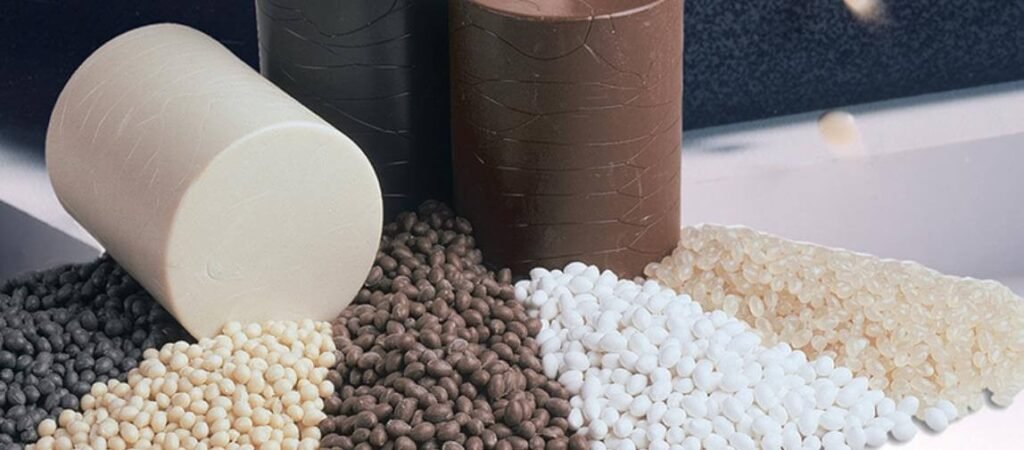
Choosing the wrong adhesive chemistry can result in hot melt adhesive not bonding properly even when process settings are correct.
The most common choice for furniture edge banding is EVA (Ethylene Vinyl Acetate) hot melt adhesive. This is because it is cheap and works well in a variety of situations. It is commonly used to make standard furniture and comes in both filled and unfilled grades. But EVA doesn’t hold up to heat and moisture as well as higher-performance systems do.
Polyamide hot melt adhesive is better at withstanding heat and cures faster, making it better for industrial uses that need better heat performance. Its primary disadvantage is higher material cost.
Among common edge banding adhesives, PUR (Polyurethane Reactive) hot melt adhesive has the best bonding power.It is perfect for making high-end furniture and decorative panels because it can withstand heat, moisture, and wear and tear for a long time. But PUR needs special processing equipment and stricter rules for keeping it in good shape.
Using EVA in an application requiring PUR-level durability is a common reason forhot melt adhesive not bonding properly under demanding service conditions. Our technical team can help recommend EVA, PA, or PUR-based solutions depending on your application needs.
Substrate Surface Quality and Material Compatibility
Substrate condition has a direct impact on bonding quality and is another major reason for hot melt adhesive not bonding properly in production.
Even the best glue won’t stick well if the surface of the substrate is dirty or chemically incompatible.
Common surface-related issues include:
• Dust contamination
• Oil or grease residue
• Moisture on the board surface
• Release agents
• Surface damage or irregularity
Also, lower-quality particleboard may soak up glue more quickly because it is more porous. In these situations, it is usually best to use a higher-viscosity adhesive to keep the glue film at the bonding interface thick enough and to stop over-penetration.
Manufacturers should also look at how the back of edge banding materials is treated. Some edge banding tapes use primer coatings or surface treatments to make the adhesive stick better. If the treatment on the back is not consistent or doesn’t work with the adhesive system, the bond may fail even if the board looks like it is sticking well. In such cases, hot melt adhesive not bonding properly may be linked more to edge banding material quality than to adhesive performance alone.
Troubleshooting Hot Melt Adhesive Bonding Problems
When hot melt adhesive not bonding properly, it’s important to take a systematic approach to fixing the problem instead of just changing production settings at random. Changing a lot of things at once can make it harder to find the root cause of bonding performance problems because many things work together to affect it.
Manufacturers ought to assess one variable at a time and confirm each modification via empirical production testing. This method helps find the real reason why the bond failed while cutting down on wasted time and materials.
In many cases, stable bonding performance can only be achieved when all of the following are properly matched as a single system: adhesive properties, machine settings, substrate characteristics, and production conditions. Manufacturers can make troubleshooting easier and get more consistent long-term production results by treating bonding as a process-wide system instead of just focusing on the adhesive.
Need Help Solving Hot Melt Adhesive Bonding Problems?
If your hot melt adhesive not bonding properly despite optimized process settings, the issue is often related to formulation mismatch with substrate, equipment, or production conditions.
With extensive experience in EVA hot melt adhesive development for edge banding applications, Adhesive (Shanghai) Co. Ltd supports manufacturers in solving bonding challenges through application-based adhesive selection.
We provide:
• Free sample testing
• Application-specific adhesive recommendations
• Technical consultation for production optimization
Our technical team can help you identify the root cause of bonding issues and recommend the most suitable adhesive solution for your production line.
Call: +86-15618525178
Email: info@great-adhesive.com
Leave a Reply